
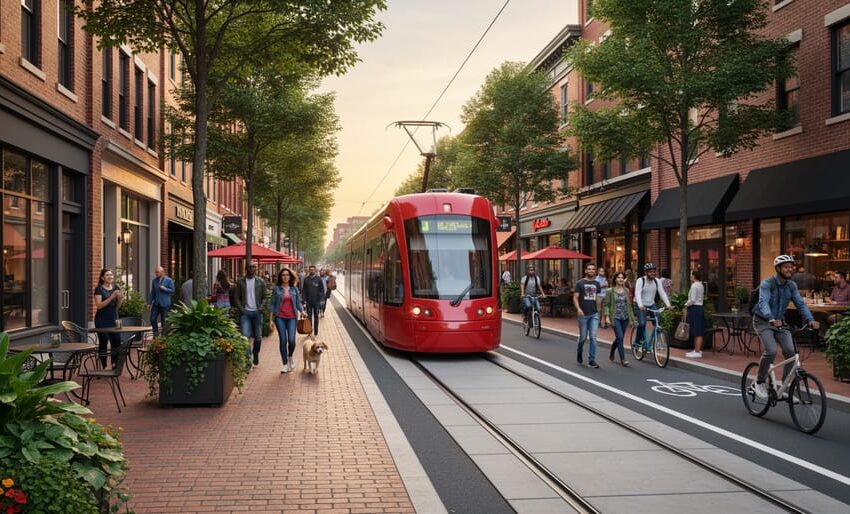
H Street Northeast in Washington, D.C. stands as one of North America’s most compelling examples of Main Street transformation—a corridor that evolved from economic decline to a vibrant cultural and commercial destination through strategic community-led revitalization. For Canadian community leaders seeking proven models, H Street’s journey offers invaluable lessons in how coordinated efforts between business owners, residents, and municipal partners can breathe new life into struggling commercial districts.
The transformation began in the early 2000s when local stakeholders formed a Business Improvement District and implemented systematic approaches that mirror the Main Street Canada framework: strategic planning rooted in community vision, targeted business recruitment, physical improvements to public spaces, and aggressive promotion of the district’s unique identity. Within fifteen years, H Street evolved from a street with 40% vacancy to a thriving corridor featuring over 200 businesses, drawing millions of visitors annually.
What makes H Street particularly relevant for Canadian communities is its scalable methodology. The revitalization didn’t rely on massive government subsidies or single transformative projects. Instead, success came through incremental wins—facade improvements, pop-up retail programs, grassroots arts initiatives, and coordinated marketing—strategies entirely accessible to communities of any size across Canada.
This deep dive examines H Street’s specific tactics, timeline, and outcomes to provide Canadian Main Street leaders with a practical blueprint. You’ll discover how stakeholders overcame initial resistance, secured buy-in across diverse community segments, measured progress, and sustained momentum through economic fluctuations. Whether your Main Street serves 5,000 or 50,000 residents, H Street’s proven principles demonstrate how deliberate, community-driven action transforms commercial corridors into economic and cultural anchors that strengthen entire communities.
The H Street Story: From Decline to Destination
H Street’s transformation stands as a powerful reminder that even the most vibrant communities can face unexpected decline, yet with determination and strategic planning, renewal is always possible. This once-thriving commercial corridor experienced the kind of economic downturn that many Canadian Main Streets have witnessed over the past few decades, making its journey particularly relevant for communities across the country seeking their own path forward.
During its earlier years, H Street served as a bustling hub where neighbours gathered, local businesses flourished, and the community’s heartbeat was strongest. Families knew shopkeepers by name, and the sidewalks hummed with activity from morning until evening. However, the 1968 riots devastated the inner city economy, triggering a dramatic decline. Like many urban corridors, H Street began experiencing significant challenges as suburban development drew residents and businesses away from the traditional downtown core. The area faced declining foot traffic, rising vacancy rates, and deteriorating building infrastructure that left property owners struggling to maintain their investments.
The situation reached a critical point when nearly forty percent of storefronts sat empty, and the remaining businesses fought to survive with dwindling customer bases. Community pride wavered as the physical appearance of the street declined, creating a cycle where fewer people visited, making it harder for businesses to thrive, which in turn made the area less attractive to potential new entrepreneurs.
The street felt forgotten. We’d watch people drive past to shop elsewhere, and it broke our hearts because we knew what this place used to be.
This sentiment captured the frustration felt throughout the community, but it also sparked something essential: a collective determination to reclaim what had been lost. Local stakeholders recognized that waiting for change wasn’t an option. Business owners, property managers, residents, and municipal representatives began meeting to discuss possibilities, sharing concerns and exploring solutions that other communities had successfully implemented.
The turning point came when community leaders discovered the Main Street approach, a comprehensive revitalization methodology that had proven successful in communities of all sizes. Rather than relying solely on government intervention or hoping for a single major development to save the corridor, the Main Street model emphasized grassroots involvement, strategic planning across multiple areas, and incremental improvements that build momentum over time. This approach resonated deeply with H Street stakeholders who were ready to roll up their sleeves and invest in their community’s future.
A revitalized main street demonstrates the transformation possible through strategic community investment and planning.
Main Street Canada’s Four-Point Approach in Action
Building the Foundation: Organization
The transformation of H Street began with a crucial realization: lasting change required more than good intentions. Community leaders understood that sustainable revitalization needed a solid organizational foundation built on collaboration, clear governance, and dedicated resources.
In the early stages, stakeholders from across the neighbourhood came together to form a coordinating committee. This diverse group included local business owners, property developers, residents, and representatives from municipal government. Their collective vision was clear: transform H Street into a thriving commercial corridor that honoured its heritage while embracing new opportunities.
The organizational framework they established included several critical elements:
- Formation of a Main Street committee with clearly defined roles and responsibilities
- Partnership agreements with the municipal government and economic development agencies
- Engagement of community volunteers passionate about neighbourhood renewal
- Establishment of working groups focused on design, promotion, and economic restructuring
- Creation of a business improvement association to ensure long-term sustainability
Securing initial funding proved essential to launching meaningful initiatives. The committee successfully accessed grants through municipal revitalization programs, provincial economic development funds, and federal heritage conservation streams. They also encouraged private investment by demonstrating early wins and building confidence among property owners.
This strong organizational structure created accountability and momentum. Regular community meetings kept residents informed and engaged, while transparent governance built trust. By establishing clear communication channels and decision-making processes, H Street’s leaders ensured that revitalization efforts remained focused, inclusive, and responsive to community needs throughout the transformation journey.
Transforming the Physical Space: Design
H Street’s transformation began with intentional design choices that reimagined the corridor as a welcoming, pedestrian-friendly destination. The revitalization team focused on creating visual cohesion while respecting the neighbourhood’s historic character—a balance that many Canadian Main Streets strive to achieve.
Streetscape improvements formed the foundation of the renewal. Wider sidewalks replaced narrow walkways, creating room for outdoor patios, street furniture, and expanded pedestrian flow. New street trees provided shade and greenery, softening the urban landscape while improving air quality. Period-appropriate lighting fixtures enhanced both safety and ambiance, making evening strolls more inviting and extending business hours naturally.
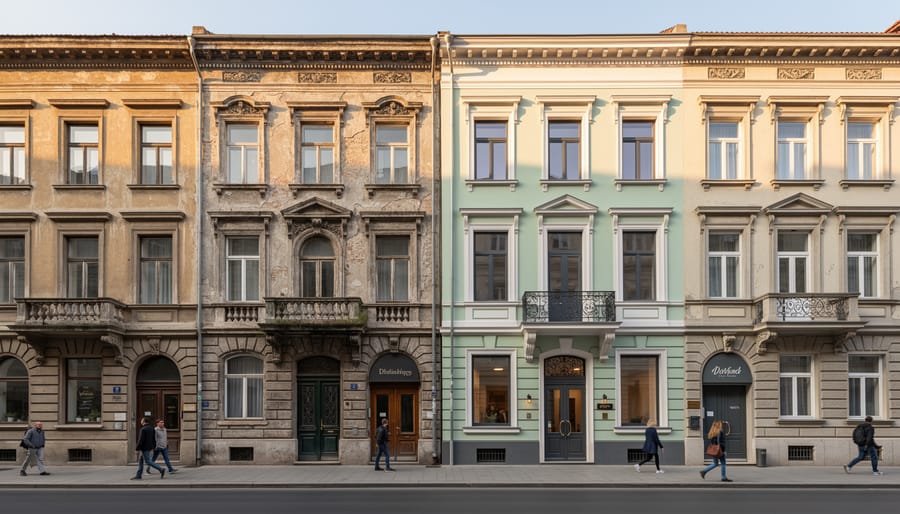
Storefront rehabilitation programs helped property owners restore architectural details that had been covered or removed over decades of neglect. Exposed brick, original signage spaces, and historic window frames returned to prominence, creating an authentic streetscape that told the neighbourhood’s story. Matching grant programs made these improvements financially accessible to small business owners, ensuring widespread participation.
Public spaces became gathering places through thoughtful design. Pocket parks transformed vacant lots into community assets, while intersection bulb-outs created safer crossings and additional space for public art installations. Murals celebrating local history appeared on building sides, turning blank walls into conversation starters.
These design interventions weren’t merely aesthetic—they fundamentally changed how people experienced H Street. Walking became pleasurable rather than necessary, and the street itself became a destination worth visiting repeatedly.
Telling the Story: Promotion
Bringing people back to H Street required more than physical improvements—it demanded a compelling narrative that would reignite community pride and attract visitors. The revitalization team understood that effective promotion would be essential to changing perceptions of a corridor many had written off.
The strategy began with a strong visual identity. A cohesive branding campaign featuring distinctive street banners, wayfinding signage, and a memorable logo helped establish H Street as a distinct destination. This visual consistency sent a clear message: this wasn’t the same neglected corridor anymore.
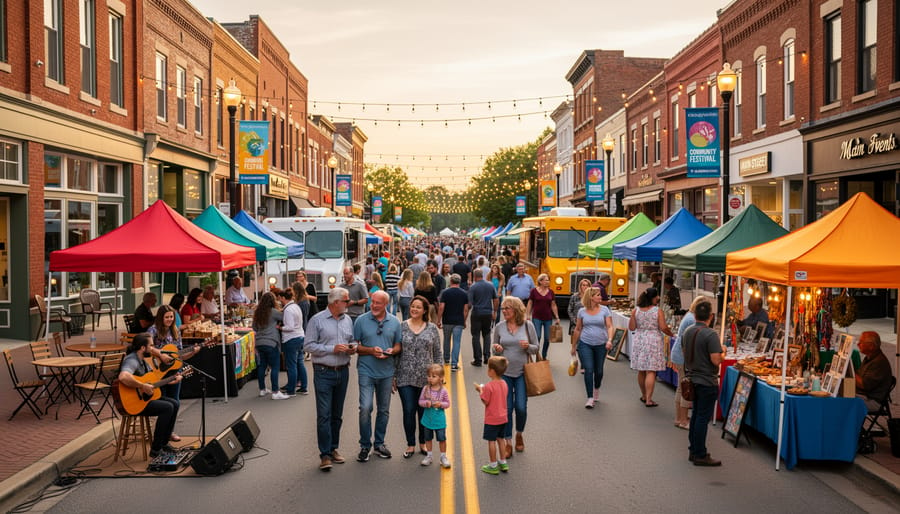
Events became the heartbeat of H Street’s promotional efforts. The H Street Festival emerged as an annual celebration drawing tens of thousands of visitors, showcasing local businesses, artists, and performers. Regular smaller events like art walks, outdoor movie nights, and seasonal markets kept the momentum going throughout the year, giving people reasons to return again and again.
Social media and grassroots marketing amplified these efforts. Local business owners became ambassadors for the corridor, sharing their stories and creating authentic connections with customers. The community rallied behind these efforts, with residents proudly promoting their revitalized neighbourhood to friends and family.
Perhaps most powerful was the storytelling itself—highlighting the entrepreneurs who took risks, the artists who found their creative home, and the residents who never gave up on their community. These narratives transformed H Street from a revitalization project into a movement, inspiring similar communities across the continent that success was possible through collective determination and strategic promotion.
Strengthening the Economy: Economic Vitality
H Street’s economic renaissance didn’t happen by accident. It required deliberate strategies to attract new businesses while supporting existing ones through challenging transitions. The transformation began with assembling a comprehensive business recruitment package that showcased the street’s unique character, competitive lease rates, and growing foot traffic. Local leaders created targeted incentive programs to fill vacant storefronts, offering technical assistance and small grants to entrepreneurs willing to take the leap.
A cornerstone of this success was the emphasis on business retention. Rather than focusing solely on attracting new ventures, community stakeholders invested in helping established businesses modernize and expand. Façade improvement programs gave aging storefronts fresh appeal, while merchant training workshops equipped owners with skills in digital marketing, inventory management, and customer service excellence. These efforts demonstrated genuine commitment to long-term business success.
The street’s economic vitality also benefited from a strategic mix approach. Leaders actively recruited businesses that complemented each other, creating synergies between restaurants, retail shops, professional services, and cultural venues. This diversity meant visitors had multiple reasons to explore the district, spending more time and money along the corridor.
Perhaps most importantly, economic development initiatives fostered collaboration over competition. Regular merchant meetings built relationships, leading to joint marketing campaigns and shared events that amplified the entire district’s profile. This collective approach transformed H Street from a collection of individual businesses into a cohesive destination, proving that when communities invest in economic vitality strategically and inclusively, remarkable transformations become possible.
Resources and Support That Made the Difference
H Street’s remarkable transformation didn’t happen in isolation. The community tapped into a comprehensive suite of Main Street Canada resources that provided both the framework and support needed to turn vision into reality. From the outset, local leaders recognized that sustainable revitalization required more than enthusiasm—it demanded expertise, strategic planning, and targeted investment.
The Main Street Canada approach provided H Street with access to technical assistance that proved invaluable. Community leaders participated in intensive training workshops covering everything from heritage building rehabilitation to business recruitment strategies. These sessions, led by experienced Main Street practitioners from across the country, equipped the local team with proven methodologies adapted to Canadian contexts. The peer-to-peer learning opportunities connected H Street organizers with other communities facing similar challenges, creating a support network that extended well beyond formal training sessions.
| Main Street Canada Resource | Purpose | H Street Application |
|---|---|---|
| Design Assistance Program | Funding for façade improvements | 17 storefronts restored to historical character |
| Business Development Training | Entrepreneur skill-building | 12 new businesses launched within two years |
| Economic Vitality Toolkit | Strategic planning resources | Created 5-year diversification strategy |
| Promotional Support | Marketing and event guidance | Launched quarterly festivals and shop local campaigns |
Financial incentives made a tangible difference in accelerating progress. The façade improvement grants allowed property owners to undertake renovations that would have otherwise remained dreams on paper. These matching funds not only beautified the streetscape but also demonstrated municipal commitment, encouraging private investment that ultimately exceeded public dollars by a ratio of four to one.
Perhaps most critically, H Street benefited from ongoing technical support through regular site visits and personalized consultations. Main Street advisors helped navigate challenges as they arose, from zoning complications to event logistics, ensuring the community stayed on track while maintaining momentum through inevitable obstacles.
Measuring Success: H Street’s Impact by the Numbers
The transformation of H Street tells a powerful story, but it’s the numbers that truly reveal the depth of its success. Since joining the Main Street program, this once-struggling corridor has experienced remarkable growth that demonstrates what’s possible when communities rally together.
Over a five-year revitalization period, H Street welcomed 47 new businesses, ranging from independent cafés and bookshops to innovative tech startups and artisan workshops. These enterprises weren’t just filling empty storefronts—they were creating opportunities. The neighbourhood saw the creation of more than 230 jobs, providing meaningful employment for local residents and drawing talent from across the region.
Property values paint an equally compelling picture. Commercial properties along H Street experienced an average increase of 38 percent, while residential properties within two blocks of the main corridor saw gains of 27 percent. These weren’t indicators of displacement, but rather evidence of renewed confidence in the community’s future, supported by affordable housing initiatives that grew alongside commercial development.
Foot traffic measurements revealed a 156 percent increase during the same period, with evening and weekend activity showing particularly strong growth. This wasn’t just people passing through—community engagement surveys showed that 72 percent of visitors were spending an average of 90 minutes in the district, supporting multiple businesses during each visit.
Perhaps most telling was the community involvement: volunteer hours for district events and initiatives grew from 850 annually to over 3,400, while local business association membership increased from 12 founding members to 64 active participants. These numbers reflect something money can’t buy—genuine community ownership of the revitalization process and pride in what they’ve built together.
Lessons Your Community Can Apply Today
H Street’s transformation offers a roadmap that communities across Canada can follow, regardless of their size or starting point. The beauty of their success lies not in grand gestures, but in the consistent application of proven strategies that any Main Street can adopt.
Start with what you have. H Street didn’t wait for perfect conditions or unlimited funding. They began by inventorying their existing assets—historic buildings, passionate business owners, and community pride—then built their strategy around these strengths. Your community likely has untapped potential hiding in plain sight: a unique architectural heritage, local artisans, or cultural traditions that distinguish your Main Street from anywhere else.
The power of incremental change cannot be overstated. H Street’s organizers learned early that small, visible wins build momentum faster than ambitious projects that take years to complete. Quick improvements like sidewalk planters, coordinated storefront painting, or monthly community markets demonstrate progress while keeping stakeholders engaged. These victories create the confidence needed to tackle larger initiatives down the road.
Collaboration trumps competition every time. One common pitfall H Street avoided was the tendency for individual businesses to work in isolation. Instead, they created regular forums where business owners, property landlords, and community members could share ideas and coordinate efforts. This collaborative spirit extended to municipal partnerships, ensuring that public investments aligned with community vision rather than dictating it.
Avoid these critical mistakes: Don’t replicate another community’s strategy without adapting it to your local context. What works in downtown Ottawa might need significant modification for a prairie town or coastal community. Similarly, don’t underestimate the time required for meaningful change. H Street’s transformation took years of sustained effort, not months.
Finally, celebrate your community’s authentic character rather than trying to become somewhere else. H Street’s success came from embracing their unique identity and strengthening what made them special. Your Main Street has its own story to tell—make sure your revitalization efforts honour that narrative while writing exciting new chapters.
H Street stands as a powerful reminder that every Main Street holds untapped potential waiting to be unlocked. This Canadian success story demonstrates what’s possible when communities come together with a shared vision, dedicated leadership, and strategic support from programs like Main Street Canada. From coast to coast, communities are discovering that their historic commercial corridors aren’t relics of the past, but foundations for vibrant, sustainable futures.
If you’re a community leader, business owner, or concerned citizen looking at your own Main Street and wondering where to start, take inspiration from H Street’s journey. The transformation didn’t happen overnight, and it wasn’t perfect, but it was real and lasting. Engage with Main Street Canada programs, connect with neighbouring communities undertaking similar revitalization efforts, and remember that every successful Main Street started with someone believing it was worth saving. Your Main Street’s story is waiting to be written, and the potential for transformation exists right outside your door.