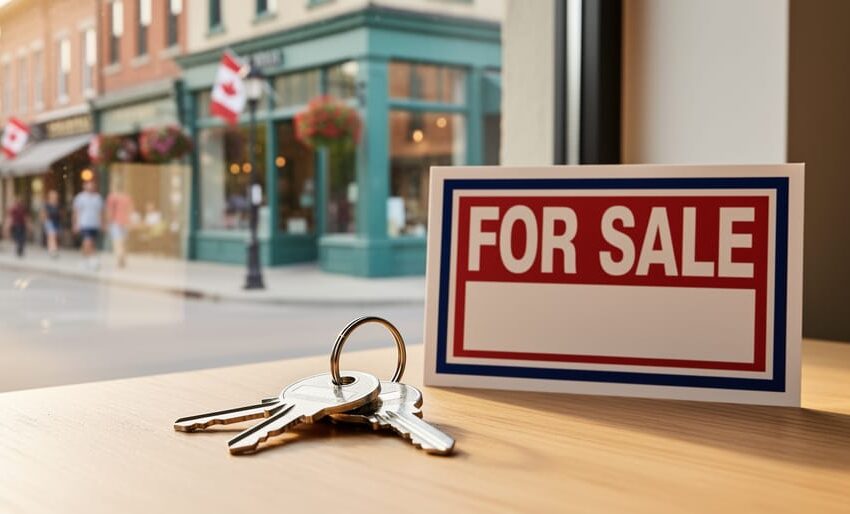
Cash home sale impact on Main Street communities refers to the economic and social ripple effects that occur when residential properties in downtown neighbourhoods are purchased quickly by investors or specialized companies that sell your house for cash bypassing the traditional real estate market. This trend matters deeply to Main Street Canada because the people who live in and around our commercial corridors sustain the shops, cafés, and services that give these districts their vitality.
When homes change hands rapidly for cash, the new ownership pattern can shift neighbourhood demographics, alter foot traffic, and reshape the customer base that local merchants depend on. Some communities have seen cash sales bring much-needed property improvements and stable long-term tenants who become regulars at nearby businesses. Others have watched as rapid turnover creates transient populations less invested in the local economy or, worse, leaves homes vacant while awaiting renovation or resale.
The question isn’t whether cash sales are inherently good or bad. It’s whether your community understands the mechanisms at play and has strategies to guide outcomes toward sustained commercial vitality. From Moncton to Nanaimo, community leaders are learning to distinguish between cash buyers who contribute to neighbourhood stability and those whose business models drain the local customer base.
This article breaks down how cash home sales function, examines their varied impacts on Main Street districts, and offers proven approaches that communities across Canada are using to protect and strengthen their commercial hearts in 2026.
What Cash Home Sales Mean for Main Street

A cash home sale is exactly what it sounds like: a buyer purchases a residential property with immediate payment rather than through traditional bank financing. For Main Street communities across Canada, this type of transaction matters far more than you might think, because the homes surrounding your commercial corridor directly determine who shops at local businesses, who walks past storefronts, and ultimately whether your downtown thrives or struggles.
The basic transaction works like this: A homeowner accepts an offer from a buyer who has cash ready (or financing already secured), the sale closes in roughly 7-14 days, and a new resident or owner takes possession. Compare that to conventional sales that often stretch 60-90 days, and you see why the speed matters. During traditional closings, properties may sit empty for weeks or months while paperwork processes. Research shows that vacant properties reduce outcomes for nearby commercial districts, affecting everything from foot traffic to business revenues.
- Cash buyer
- An individual or entity purchasing property with funds immediately available, without needing mortgage approval or traditional bank financing.
- Quick close
- A sale completion in 7-14 days rather than the typical 60-90 day timeline, minimizing the period a property sits vacant between owners.
- Property investor
- A buyer purchasing residential real estate as a financial investment, who may rent it out, renovate and resell, or hold it long-term.
- Residential density
- The number of occupied homes in a given area, directly influencing the potential customer base for nearby Main Street businesses.
- Community turnover
- The rate at which residents move in and out of a neighborhood, affecting social cohesion and the stability of local spending patterns.
Here’s the Main Street connection: residential neighborhoods feed commercial corridors. When homes change hands quickly through cash sales, the speed of that transition determines how long your Main Street operates with one fewer household shopping locally. Rapid turnover with immediate occupancy maintains customer flow. Slow transitions or properties converted to long-term vacancies chip away at the foot traffic that sustains restaurants, retailers, and service businesses.
How Cash Sales Affect Community Economic Vitality
The Occupancy Factor
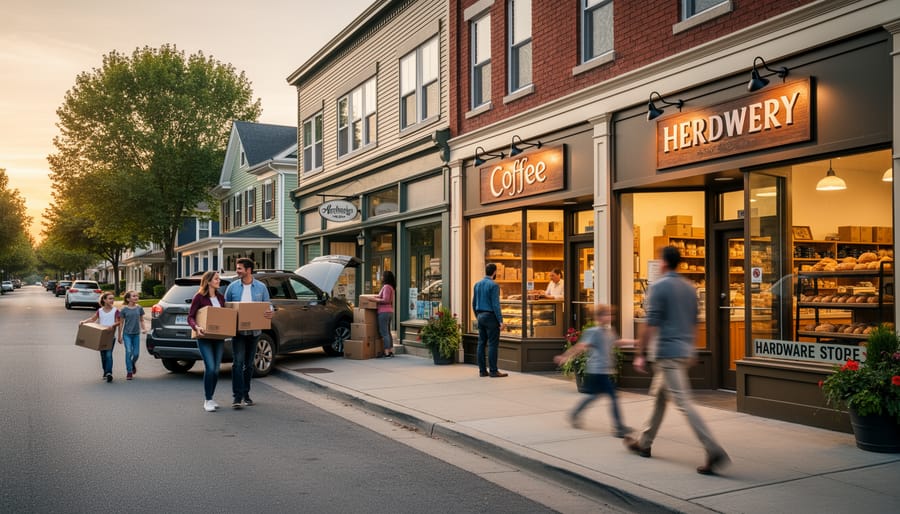
The speed at which a sold home fills with new occupants makes all the difference for Main Street businesses. When a cash sale closes and new residents move in within weeks, the disruption to local spending patterns remains minimal. Coffee shops, restaurants, and retailers barely notice the transition.
The owner-occupier versus rental distinction matters considerably. Owner-occupiers typically invest more in their neighborhoods, shopping locally and participating in community events. They become regulars at Main Street establishments, building relationships with business owners. Renters may offer similar patronage, though landlords purchasing multiple properties can create uncertainty. A single investor acquiring several homes might fill them with stable, long-term tenants who embrace the neighborhood, or cycle through short-term occupants who never establish local connections.
The problematic scenario emerges when properties sit empty between transactions or undergo extended renovations. A home vacant for six months represents half a year of lost Main Street customers. Three vacant homes on one block? That’s potentially thousands in forgone annual revenue for nearby businesses. The occupancy timeline from sale to move-in directly translates to commercial corridor health.
Local Spending Patterns
When a home sells quickly for cash and new residents move in within days rather than months, the spending rhythm along Main Street shifts noticeably. Traditional sales often leave properties empty for 30 to 90 days during financing, inspections, and closing, a period when no one is walking to the corner café for morning coffee or stopping at the hardware store for weekend projects. Cash transactions compress this gap, sometimes to a single week, meaning Main Street businesses lose fewer customer days to vacancy.
The impact varies by buyer type. Owner-occupiers who move in immediately tend to establish regular spending patterns quickly: they’re getting keys cut at the locksmith, buying cleaning supplies, ordering takeout while boxes pile up, and gradually discovering their neighbourhood restaurants and shops. These early transactions matter, first impressions often shape long-term loyalty to local businesses.
Conversely, properties purchased by investors may sit empty during renovations or between tenants, creating spending dead zones despite the rapid sale. A rental property that turns over twice yearly means repeated vacancy periods when no one is contributing to daily foot traffic or spontaneous purchases.
Main Street businesses feel this difference in their registers. A strip with three vacant homes undergoing slow traditional sales represents months of lost potential customers. Those same three homes sold quickly to families who move in immediately translate to new faces in shops within weeks, not seasons.
Three Types of Cash Sale Scenarios and Their Community Impact
Not all cash buyers are alike, and the type of purchaser stepping into a Main Street neighborhood property shapes the community outcome far more than the sale speed itself. Understanding which category of buyer is becoming active in your area helps BIAs and local organizations anticipate changes and respond strategically.
Individual Owner-Occupiers Buying Their Next Home
When someone sells their previous property and uses the proceeds to buy a Main Street neighborhood home outright, the community typically sees the strongest continuity. These buyers move in quickly, often within weeks, and have every incentive to integrate into the neighborhood since it’s their primary residence. They shop at the corner bakery, grab coffee at the local café, and become familiar faces on the street. Property maintenance stays consistent because homeowners protect their own investment, and they’re likely to participate in community events, join residents’ associations, and support Main Street businesses through regular patronage. For commercial corridors, this scenario mirrors traditional mortgaged purchases in its positive impact.
Small-Scale Investors and Local Landlords
The second category involves individuals or couples purchasing one to three properties as rental investments, often living in the same community or nearby. Impact here varies but leans positive when landlords are local and engaged. Good landlords screen tenants carefully, maintain properties well, and often encourage renters to support neighborhood businesses. Occupancy typically happens within one to two months as the property gets rental-ready. The key variable is tenant stability: long-term renters become invested community members much like owners, while high turnover creates disruption. Main Streets fare best when these investors view themselves as neighborhood stakeholders, not just income generators.
Corporate and Institutional Investment Entities
Large-scale investors purchasing multiple properties across neighborhoods present the most complex scenario. These entities, ranging from real estate investment trusts to corporate landlords, operate at scale and prioritize returns over community integration. Properties may sit vacant longer during renovations, and tenant screening focuses on financial metrics rather than neighborhood fit. Maintenance is often outsourced and reactive rather than proactive.
Each buyer type creates distinct community outcomes:
- Owner-occupiers: immediate occupancy, high local engagement, strong maintenance, consistent Main Street patronage
- Small investors: 1-2 month occupancy gap, moderate engagement depending on landlord proximity, maintenance varies by owner commitment, tenant-dependent patronage
- Corporate entities: extended vacancy periods, minimal community engagement, standardized maintenance, unpredictable patronage patterns
The proportion matters significantly. A Main Street neighborhood absorbing occasional corporate purchases alongside steady owner-occupier and small-investor activity maintains resilience. But when institutional buyers dominate, say, acquiring 30-40% of available properties within two years, the neighborhood character shifts noticeably. Longtime residents feel less connection, businesses lose familiar customers during vacancy periods, and the street’s social fabric loosens. Community leaders tracking cash sale trends should monitor not just volume but buyer composition, since that determines whether the neighborhood strengthens or fragments.
How Main Street Communities Can Respond
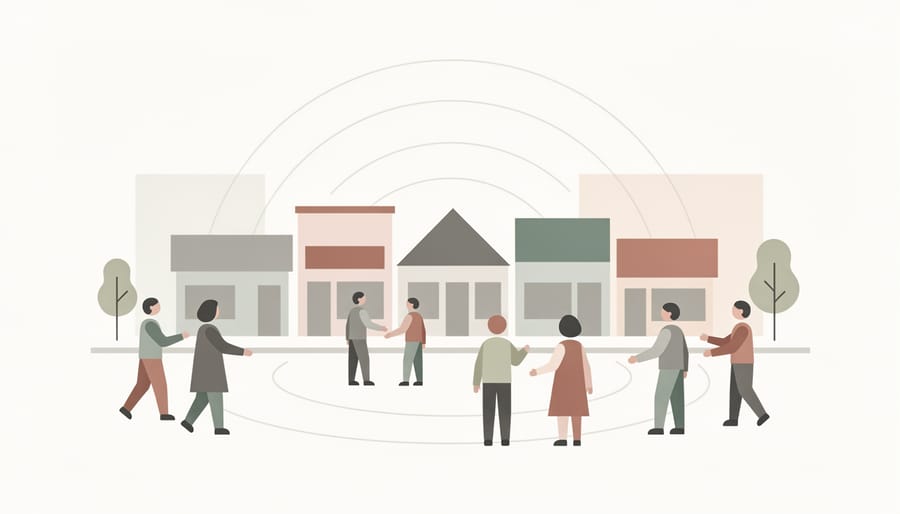
Main Street communities hold more influence over cash sale outcomes than many leaders realize. The key lies in proactive engagement rather than passive observation.
Start by creating a welcome system for new residents before they’ve even unpacked. Partner with real estate agents and cash buyers to deliver Main Street welcome packages, gift certificates for local shops, maps highlighting neighborhood gems, invitations to community events. When someone buys a home on Tuesday, they should receive a warm greeting by Friday. This simple gesture converts newcomers into Main Street supporters from day one.
BIAs can work with local governments to establish community character guidelines that encourage diverse housing options while preserving the architectural fabric that makes Main Streets distinctive. Consider incentive programs for buyers who commit to maintaining heritage features or supporting local contractors for renovations. A local revitalization advisor can help coordinate these efforts across stakeholder groups.
Build bridges between longtime residents and newcomers through intentional programming. Host quarterly neighborhood gatherings, organize cultural events that celebrate community identity, or create mentorship programs pairing established residents with recent arrivals. When people feel connected to their neighbors, they invest in local businesses and participate in civic life.
Monitor residential turnover patterns in your Main Street area. Track whether properties become rentals or remain owner-occupied, note vacancy periods, and gather data on new resident demographics. This intelligence helps BIAs adjust their programming and ensures businesses understand their evolving customer base.
Consider creative placemaking initiatives like street art projects or parklet installations that give newcomers immediate reasons to explore the commercial corridor. Physical improvements signal vitality and encourage new residents to see themselves as part of the Main Street story.
The most successful communities treat every home sale as an opportunity to strengthen rather than threaten their commercial core.
Success Story: How One Canadian Main Street Adapted
When the Riverside Main Street district in a mid-sized Ontario city noticed a 40% uptick in cash home sales over eighteen months, the local Business Improvement Area didn’t wait to see what would happen. They launched a “New Neighbour Welcome Initiative” that fundamentally changed how the community approached residential turnover.
The BIA partnered with real estate agents who specialized in cash transactions to identify new homeowners within their first week of ownership. Each received a personalized welcome package containing gift certificates from local businesses, a Main Street walking map highlighting independently-owned shops and restaurants, and an invitation to a quarterly “Meet Your Main Street” evening event.
What made the program effective wasn’t just the welcome kit. The BIA coordinated with the local library to host orientation sessions where new residents learned about community events, parking options, and ongoing revitalization projects. Long-time residents volunteered as “neighbourhood ambassadors,” offering informal coffee meetups to answer questions and share their favourite local spots.
The results surprised even the organizers. Within two years, surveys showed that 78% of new cash-sale homeowners regularly patronized Main Street businesses, compared to 52% of residents who had moved in through traditional sales. The faster settlement timeline of cash transactions meant less time with vacant properties and quicker integration into community life.
The initiative cost roughly $15,000 annually but generated measurable returns. Three new businesses opened specifically to serve the evolving neighbourhood demographics, and the district saw a 23% increase in foot traffic during the program’s second year. The key insight: residential turnover creates opportunity when communities actively welcome change rather than passively experiencing it.
Common Questions About Cash Sales and Community Health
Do cash sales harm Main Street businesses?
Not automatically. The impact depends on who buys the property and how quickly they occupy it. Owner-occupiers who move in immediately often become Main Street customers faster than traditional buyers waiting on financing, while properties that sit vacant or become short-term rentals can reduce the reliable customer base local businesses depend on.
How quickly do new residents typically engage with Main Street?
Most new homeowners begin exploring their Main Street within the first two weeks of moving in, seeking essentials like groceries, coffee, and household items. The difference with cash sales is that this engagement can happen faster since there’s no waiting period between offer acceptance and possession.
What’s the difference between investor-owned and owner-occupied properties for Main Street vitality?
Owner-occupied homes typically generate more stable, year-round foot traffic and community investment. Long-term rental properties can provide similar benefits if tenants stay for years, but short-term rentals and frequently flipped properties create gaps in the customer base that Main Street businesses notice, particularly in shops that rely on regular patrons.
Can communities actually influence who buys local homes?
Communities can’t control private real estate transactions, but they can create welcoming programs that encourage new residents to become engaged neighbors, work with landlords to promote long-term tenancies, and advocate for municipal policies that support housing diversity and neighborhood character preservation.
These questions reflect what business owners bring to BIA meetings and what residents raise at community forums. The underlying concern is usually the same: will our neighborhood still feel like a neighborhood, and will Main Street still have the customer base it needs?
The reassuring reality is that communities have more agency than they think. While you can’t stop cash sales or dictate buyer intentions, you can shape how new residents connect with Main Street through thoughtful welcome initiatives, strong business-community partnerships, and clear communication about what makes your corridor special. Many successful Main Streets have discovered that being proactive, rather than reactive, transforms potential challenges into opportunities for renewal and growth.
The impact of cash home sales on Main Street communities isn’t predetermined, it’s shaped by how residents, business owners, and community organizations choose to respond. A quick residential transaction can weaken a commercial corridor if it leads to vacant properties or absentee ownership with no connection to local businesses. Yet that same transaction can strengthen Main Street vitality when it brings engaged new residents who quickly become regular customers and active community members.
Canadian Main Street communities hold the tools to influence these outcomes. By creating welcoming programs for new residents, supporting diverse housing options that maintain neighborhood character, and building strong relationships between residential areas and commercial districts, communities can turn residential turnover into an opportunity rather than a threat.
The neighborhoods that thrive aren’t necessarily those with the slowest property turnover or the highest barriers to sale. They’re the ones that adapt thoughtfully, maintain their distinct character, and ensure every resident, new or long-established, feels connected to the businesses, organizations, and public spaces that make Main Street worth supporting. Your community’s response matters more than the sales themselves.