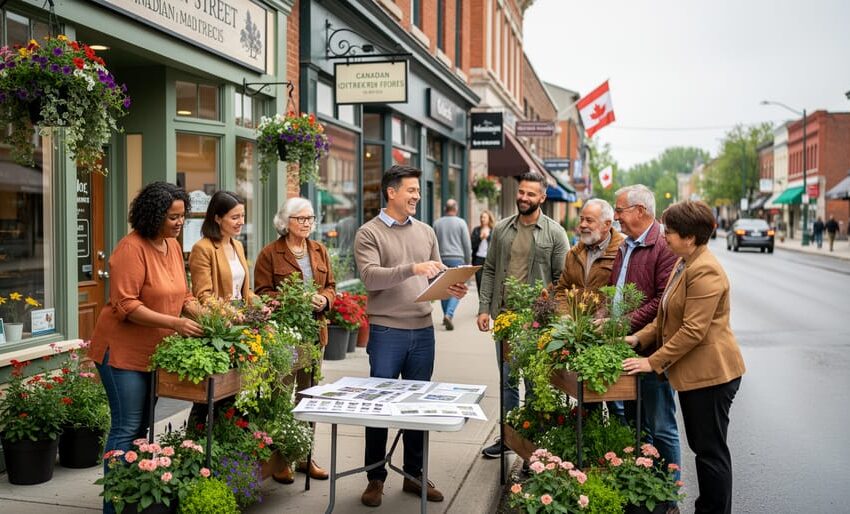
Community involvement is the active participation of residents, business owners, and local organizations in shaping the future of their neighbourhood through volunteering, planning, advocacy, and collaboration. It transforms Main Streets from simple commercial corridors into vibrant gathering places where people feel ownership and pride.
Across Canada, thriving downtowns share one common trait: engaged citizens who show up. Whether it’s a shopkeeper joining a streetscape committee in Moncton, volunteers planting flowers along a Winnipeg avenue, or residents attending town halls to voice ideas for their local core, these actions create momentum that no single municipality or developer can replicate alone.
Community involvement matters because it bridges the gap between what officials plan and what actually works for the people who live, work, and shop on Main Street. Local knowledge catches problems early, surfaces creative solutions, and builds the trust needed to see long-term projects through. When residents help decide how their street evolves, they become champions who stick around to support the businesses, events, and public spaces they helped create.
This article breaks down what community involvement looks like in practice, the forms it takes in Canadian Main Street settings, and how anyone can start contributing to their local revitalization effort.
What Community Involvement Means
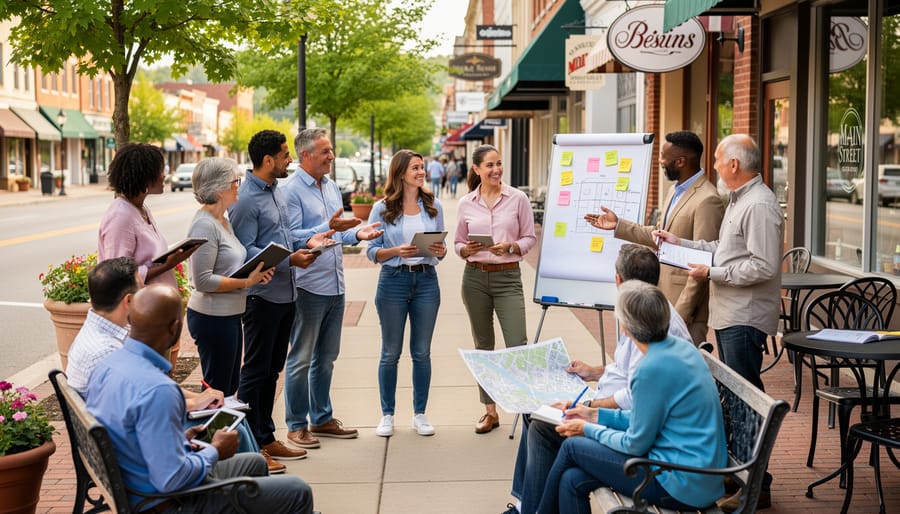
Community involvement is active participation by residents, businesses, organizations, and institutions in shaping, supporting, and sustaining their local Main Street. It goes beyond simply shopping or walking through a commercial district, it means showing up, contributing skills and time, advocating for the street’s needs, and taking shared ownership of its future.
This active engagement differs sharply from passive support. Passive support might look like occasionally shopping local when it’s convenient or liking a social media post about a street festival. Community involvement, by contrast, means volunteering to organize that festival, serving on a business improvement association committee, speaking at a municipal meeting about streetscape improvements, or mentoring a new business owner. It’s the difference between being a spectator and being a participant.
- Stakeholder
- Any individual or group with an interest in the Main Street’s success, including residents, business owners, property owners, employees, and municipal partners.
- Engagement
- The process of actively connecting stakeholders to Main Street initiatives through consultation, dialogue, and meaningful participation opportunities.
- Collaboration
- Working together across different groups, businesses, residents, government, organizations, toward shared goals for the commercial district.
- Grassroots Participation
- Community-driven action that originates from residents and local stakeholders rather than being imposed from above.
- Civic Pride
- A sense of ownership, belonging, and community pride in the local Main Street, motivating people to invest time and energy in its improvement.
The relationship between a community and its Main Street is reciprocal. When residents, businesses, and institutions invest their energy and ideas, the street becomes more vibrant, economically healthy, and reflective of local identity. That vibrancy, in turn, draws more participation, creating a positive cycle where involvement and success reinforce each other. A thriving Main Street doesn’t just serve a community, it’s actively built by one.
How Community Involvement Works in Practice
Community involvement doesn’t happen by accident. It follows a cycle where information flows outward, stakeholders respond with ideas and energy, and organizations create structures to channel that input into action.
The process typically starts when a Main Street organization, business improvement area (BIA), or municipal department identifies a need or opportunity, maybe a vacant storefront cluster, declining foot traffic, or a desire to expand cultural events. They reach out to the community through newsletters, social media, public meetings, or direct invitations. Residents and business owners hear the call and choose how to engage based on their interests, skills, and available time.
What makes this work is the variety of entry points. Community members connect through:
- Volunteer committees focused on specific initiatives like streetscape improvements or marketing
- Public consultations where residents weigh in on design plans or policy changes
- Business improvement associations that coordinate merchant collaboration
- Town halls addressing broader revitalization strategy
- Community events that build connection while raising funds or awareness
- Fundraising initiatives supporting specific projects or ongoing operations
- Skills-sharing programs where professionals mentor emerging entrepreneurs
Each stakeholder plays a distinct role. Residents bring local knowledge and volunteer labour. Business owners contribute industry expertise and help implement changes. Organizations provide coordination and continuity. Municipal partners offer funding, regulatory support, and infrastructure investment. The magic happens when these groups stop working in isolation and start collaborating around shared goals.
Effective community involvement also requires feedback loops. When volunteers organize a farmers market, they report attendance and vendor interest back to the BIA. When residents request bike lanes at a consultation, the municipality explains what’s feasible and why. When business owners test a new storefront hours initiative, they share sales data that informs future decisions. This exchange transforms involvement from a one-time gesture into an ongoing conversation that shapes Main Street’s evolution year after year.
Forms of Community Involvement
Direct Participation and Volunteering
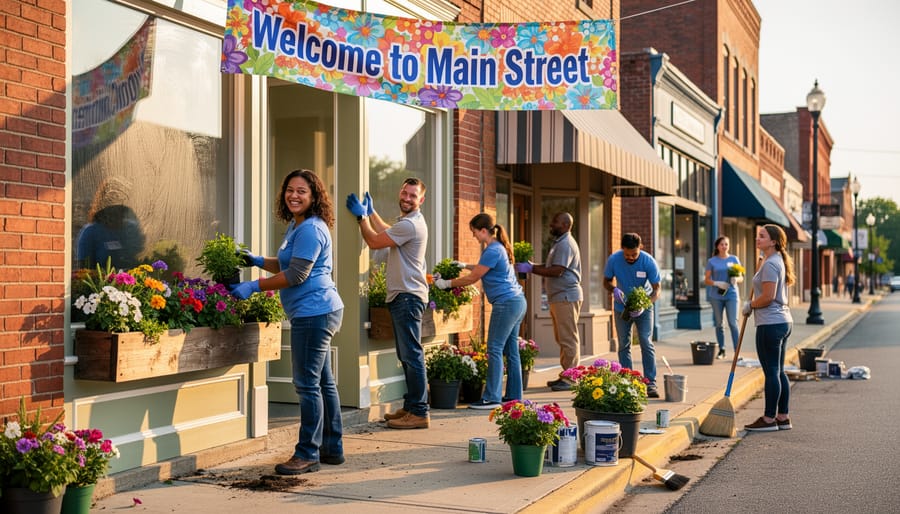
Direct participation starts with showing up. In Canadian Main Streets, volunteers organize seasonal festivals, plant flower boxes along sidewalks, paint murals on blank walls, and staff information booths during community events. These hands-on contributions transform commercial districts while building relationships between neighbours who might never otherwise meet.
Committee membership offers another avenue for involvement. Main Street advisory boards, Business Improvement Area committees, and design review panels need residents willing to attend monthly meetings, review proposals, and shape revitalization priorities. These positions require consistent time investment but give community members real influence over decisions affecting their commercial district.
Street teams take direct action on specific projects, cleaning up litter before a festival, installing holiday decorations, or coordinating farmers’ market logistics. Many Canadian Main Streets match volunteer efforts with funding support, including Main Street grants that turn volunteer labour into tangible improvements. In Picton, Ontario, resident volunteers painted crosswalks and built parklets that became permanent fixtures, demonstrating how sweat equity creates lasting change when paired with community coordination.
Economic Support and Patronage
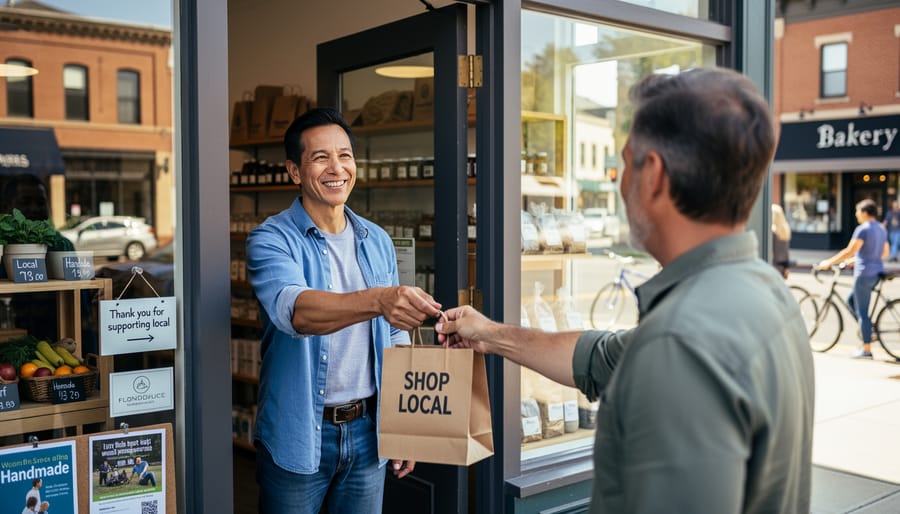
Every dollar spent on Main Street is a vote for your community’s future. Economic support goes beyond mere transactions, it’s about creating a local multiplier effect that keeps money circulating within your neighbourhood.
Shopping local means choosing the independent bookstore over Amazon, the family-run hardware store instead of big-box chains. It means grabbing coffee from the café where the owner knows your name, not a drive-through franchise. These choices directly fund the wages of your neighbours, the sponsorships of local sports teams, and the tax base that maintains your streets.
Hiring local services, contractors, accountants, graphic designers who work from Main Street offices, strengthens the entire business ecosystem. Many community members also become investors, putting capital into crowdfunding campaigns for new restaurants or community loan funds that help entrepreneurs launch.
The impact is measurable: studies consistently show that local businesses recirculate roughly three times more money in the local economy than chains do, supporting jobs and services that benefit everyone.
Advocacy and Voice
Advocacy turns community support into influence. Showing up at council meetings to speak about a proposed development, writing a letter backing a Main Street grant application, or sharing your support for local planning initiatives gives decision-makers proof that residents care. These public displays of backing carry weight when municipalities allocate budgets, approve permits, or set priorities for infrastructure.
Social media amplifies individual voices into collective momentum. Tagging businesses in posts, sharing event announcements, celebrating new openings, or explaining the economic impact of shopping local reaches audiences beyond your immediate circle. A dozen residents consistently championing their Main Street online can shift perceptions and drive foot traffic more effectively than paid advertising.
Participation in planning consultations, whether for streetscape redesigns, zoning changes, or transportation projects, ensures community needs shape outcomes. Your input on sidewalk width, parking configurations, or heritage guidelines directly influences how livable and successful your Main Street becomes. These formal channels exist precisely to gather resident perspective; using them is how you ensure revitalization reflects what the community actually wants, not just what planners assume.
Skills and Resource Sharing
Community involvement isn’t only about time or money, it’s also about sharing what you know. Professionals living in or near Main Street communities often possess skills that can accelerate revitalization efforts when offered pro bono or at reduced rates. A lawyer might review lease agreements for new retailers, a graphic designer could create branding for a street festival, or a marketing consultant might advise the business improvement area on social media strategy.
Mentorship programs formalize this knowledge transfer. Established business owners guide newcomers through supplier relationships, seasonal inventory challenges, and navigating municipal permits, the practical wisdom that doesn’t appear in textbooks. In Peterborough, Ontario, veteran retailers run monthly coffee sessions where they share hard-won lessons about winter foot traffic and summer tourist patterns with entrepreneurs opening their first shops.
This exchange works both ways. Younger business owners often bring fresh digital marketing skills or sustainability practices that benefit long-time merchants. Resource sharing turns individual expertise into collective strength, making the entire commercial district more resilient without requiring anyone to write a cheque.
Where Community Involvement Makes a Difference
Community involvement translates directly into measurable change across five key impact areas. Economically, engaged communities see higher business survival rates, increased foot traffic, and more diversified retail mixes as local spending stays local. A 2024 study of Ontario Main Street programs found that districts with active volunteer committees experienced 23% higher customer retention compared to passive markets.
Socially, involvement builds the connections that turn a commercial strip into a gathering place. Neighbours meet at cleanup days, business owners collaborate on events, and newcomers find their footing through volunteer roles. This social fabric creates the trust and familiarity that keep people coming back.
Cultural preservation happens when communities rally to protect historic buildings, celebrate local traditions, and maintain the distinctive character that makes a Main Street irreplaceable. In Steveston Village, British Columbia, resident-led heritage committees worked with business owners and the municipality to preserve the fishing village’s historic character while revitalizing Main Streets through cultural programming and adaptive reuse projects. The result: a thriving district where heritage and commerce reinforce each other.
Physical improvements follow when community members invest sweat equity. Volunteer-led beautification projects, façade upgrades, public art installations, and streetscape enhancements create the attractive environment that draws both shoppers and new businesses.
Sustainable development emerges from community involvement because locals prioritize long-term vitality over short-term gains. They push for walkability, support independent businesses over chains, and advocate for development that serves residents rather than erodes neighbourhood character.
Common Questions About Getting Involved
Getting involved in your Main Street doesn’t require a massive time commitment or specialized expertise. Many community members worry they don’t have enough to offer, but the reality is that successful Main Street revitalization thrives on contributions of all sizes and types.
How much time does community involvement require?
Involvement is flexible and scales to your availability. Some people attend quarterly meetings, while others volunteer a few hours monthly for events or projects, there’s no minimum commitment, and even occasional participation creates impact.
Do I need special skills to get involved?
No special skills are required to start. Many opportunities simply need willing hands and community spirit, though if you do have professional expertise, Main Street organizations often welcome pro bono support in areas like marketing, design, or planning.
How do I find involvement opportunities?
Contact your local Business Improvement Area office, Main Street association, or municipal economic development department. Most organizations maintain volunteer lists and post upcoming events on social media or community boards.
What if I’m new to the community?
Being new offers fresh perspective that established residents might miss. Attending a public event or visiting the Main Street office to introduce yourself are great starting points, most communities welcome newcomers eager to contribute.
The key is matching your involvement level to your capacity. Showing up to support a street festival counts. So does shopping at three local businesses instead of ordering everything online. A retired accountant offering quarterly financial reviews to new businesses makes a difference, but so does a teenager helping paint planters on a Saturday morning.
Start small and let your involvement grow organically. Many deeply engaged Main Street volunteers began by attending a single community meeting out of curiosity. The important thing is taking that first step, whether it’s signing up for a committee email list or simply making your next purchase on Main Street instead of at a big box store.
Community involvement isn’t just a nice-to-have for Main Street success, it’s the essential ingredient. Every thriving commercial district across Canada started with people who cared enough to show up, contribute, and stay committed through challenges and victories alike. When residents and business owners work together, they create something far greater than the sum of individual efforts: a vibrant, resilient neighbourhood that reflects shared values and meets real community needs.
The beauty of community involvement is that it scales to fit your capacity. You don’t need to chair a committee or organize a festival to make a difference. Shopping at your local bakery, attending a planning meeting, posting about a new Main Street business, or spending an afternoon painting a community mural, these actions matter. They compound over time, building momentum that transforms streets and strengthens social fabric.
Your Main Street needs you, and it needs you exactly as you are, with the time and skills you have to offer right now. The first step is often the hardest, but it’s also the most important. Find one way to engage this month, volunteer for an event, join a business association meeting, or simply start a conversation with a Main Street business owner. That single action connects you to a network of people working toward the same goal: a thriving heart for your community.