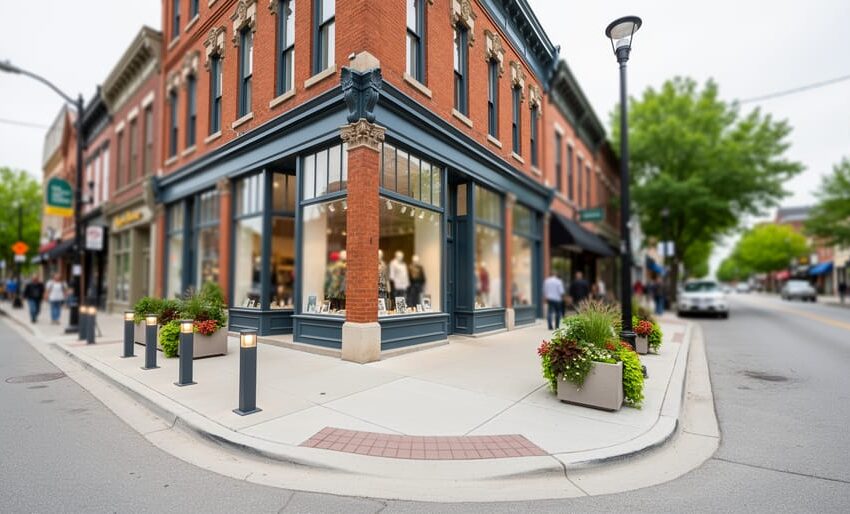
Z funding is a municipal financing tool that allows Canadian communities to collect voluntary contributions from local businesses to pay for Main Street improvements, streetscape enhancements, and revitalization projects that directly benefit those same contributors. The name comes from the alphabetical placeholder in early municipal finance legislation, and while the mechanism varies slightly by province, the principle remains the same: property owners or businesses in a defined area vote to tax themselves, and those funds go toward projects they collectively choose, from new sidewalks and lighting to marketing campaigns and beautification efforts.
For community leaders exploring ways to breathe new life into aging commercial districts, Z funding offers something traditional municipal budgets often can’t: dedicated, predictable revenue that stays in the neighbourhood where it’s raised. In places like Stratford, Ontario, and Mahone Bay, Nova Scotia, this approach has funded heritage façade restorations, seasonal festivals, and pedestrian improvements that drew shoppers back to downtowns once losing ground to suburban plazas.
The process typically requires a petition from affected businesses, a vote demonstrating majority support, and approval from municipal council. Once established, the levy appears as a separate line on property tax bills and can run for several years, giving Business Improvement Areas the stability to plan long-term projects rather than scrambling for grants year after year. Success hinges on clear communication, shared vision, and visible wins early in the process.
What Z Funding Is and How It Works
Z funding emerged in 2018 as a Canadian approach to community economic development, designed specifically for smaller municipalities and business improvement areas that traditional grant structures often overlook. Named after the collaborative framework that defines it, bringing together three levels of government, local business associations, and community stakeholders, Z funding puts decision-making authority directly in the hands of those who know their Main Streets best.
Unlike conventional grant programs where applicants submit proposals to distant committees for approval, Z funding operates through a partnership model. A community first establishes a local steering committee representing businesses, property owners, municipal staff, and residents. This committee identifies priorities, develops project proposals, and makes funding allocation decisions within established parameters. The federal and provincial governments provide the capital, but local leaders determine how it gets deployed to address their specific challenges.
The structure requires matched contributions: for every dollar of Z funding allocated, the community must secure matching investment from municipal budgets, business levies, or private sources. This typically follows a 50-30-20 split, 50 percent from federal and provincial Z funding pools, 30 percent from municipal sources, and 20 percent from local business contributions or in-kind support. The matching requirement ensures skin in the game and filters out projects lacking genuine community backing.
Applications move through a streamlined process. Communities submit a letter of intent demonstrating partnership readiness and preliminary project scope. Approved applicants then work with regional coordinators to formalize their steering committee structure, develop detailed project plans, and establish accountability measures. Most communities receive decisions within 90 days of submitting complete applications, considerably faster than traditional grant timelines that can stretch six months or longer.
The decision-making framework emphasizes outcomes over process. Rather than prescriptive rules about what qualifies, Z funding asks communities to demonstrate how proposed projects will increase foot traffic, support business retention, create gathering spaces, or strengthen local identity. This flexibility allows a coastal town to invest in waterfront activation while a prairie community focuses on winter programming, each addressing what matters most to their Main Street.
Eligibility and Application Requirements for Main Street Communities

Z funding applications are open to incorporated community organizations, Business Improvement Areas (BIAs), and registered non-profits representing a defined Main Street district. Municipalities can also apply directly if they’re partnering with local stakeholders, but the program prioritizes community-led initiatives over top-down municipal projects. Your organization needs to be in good standing with provincial registries and able to demonstrate active community engagement before submission.
Qualifying initiatives fall into several categories: physical improvements to streetscapes or building façades, business development programs, marketing campaigns that promote the entire district rather than individual businesses, and cultural or arts programming that draws visitors to Main Street. Projects must serve the broader community and show measurable benefit beyond a single property owner. One-off events typically don’t qualify, but a series of events tied to a cohesive strategy often does.
Documentation requirements include your organization’s incorporation papers, proof of partnership support (letters from at least three local businesses or property owners), a detailed project budget with quotes where applicable, and a community needs assessment showing how your initiative addresses a gap. You’ll also need to submit a sustainability plan explaining how the project will continue after Z funding concludes. Financial statements from the past two years demonstrate your capacity to manage grant funds responsibly.
Partnership prerequisites vary by project scale. Smaller applications under $25,000 require three confirmed partners; larger requests need five or more, and at least one must be a property owner in the district. Matching funds or in-kind contributions are mandatory, most programs require applicants to cover 25 to 40 percent of total costs, though this can include volunteer labour valued at fair market rates.
Timeline considerations matter. Application windows typically open in early spring with decisions announced by late summer. Implementation must begin within six months of approval, and most projects have a 12- to 18-month completion requirement. Plan for a three-month preparation phase before you submit to gather documentation and secure partnerships.
What Z Funding Covers for Main Street Revitalization
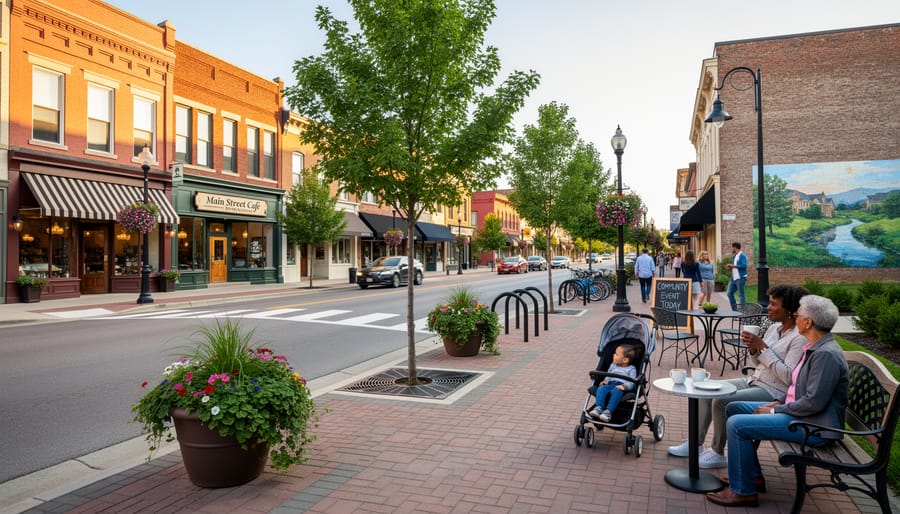
Z funding allocates grants across six core categories, each designed to address a distinct aspect of Main Street renewal. Communities can apply for up to $75,000 per project, though most awards range between $15,000 and $50,000 depending on scope and demonstrated need. Applicants must contribute matching funds, typically at a 1:1 ratio, though communities with populations under 10,000 may qualify for a 2:1 funding-to-match arrangement.
| Project Category | Typical Funding Range | Matching Requirement |
|---|---|---|
| Façade improvements and streetscape design | $20,000, $50,000 | 1:1 (2:1 for small communities) |
| Public space enhancements (parks, seating, lighting) | $25,000, $60,000 | 1:1 |
| Business training and capacity-building programs | $10,000, $25,000 | 1:1 |
| Marketing campaigns and placemaking initiatives | $15,000, $35,000 | 1:1 |
| Infrastructure upgrades (accessibility, Wi-Fi, wayfinding) | $30,000, $75,000 | 1:1 |
| Cultural programming and community event series | $12,000, $30,000 | 1:1 (2:1 for small communities) |
Façade improvements often cover exterior restoration, window replacement, signage upgrades, and heritage-appropriate materials that enhance visual coherence. Public space enhancements might fund seating areas, streetscape furniture, parklets, decorative lighting, or landscaping that invites pedestrian activity. Business training programs include workshops on digital marketing, financial literacy, customer service, and seasonal merchandising, skills that help local merchants compete.
Marketing initiatives supported by Z funding range from brand development and wayfinding systems to coordinated promotional campaigns and social media content creation. Infrastructure upgrades address accessibility retrofits, broadband installations, bike racks, and digital kiosks that modernize the district. Cultural events and programming, such as festivals, art installations, live music series, and seasonal markets, receive funding to animate public spaces and draw residents downtown.
Communities often layer Z funding with provincial heritage grants, federal infrastructure programs, or private sponsorships to maximize impact. The model explicitly encourages this stacking approach, recognizing that comprehensive revitalization requires diverse revenue streams. Some municipalities use Z funding as seed capital for community events that later become self-sustaining through ticket sales or vendor fees, creating a long-term return on the initial investment.
Success Stories: Z Funding in Action on Canadian Main Streets
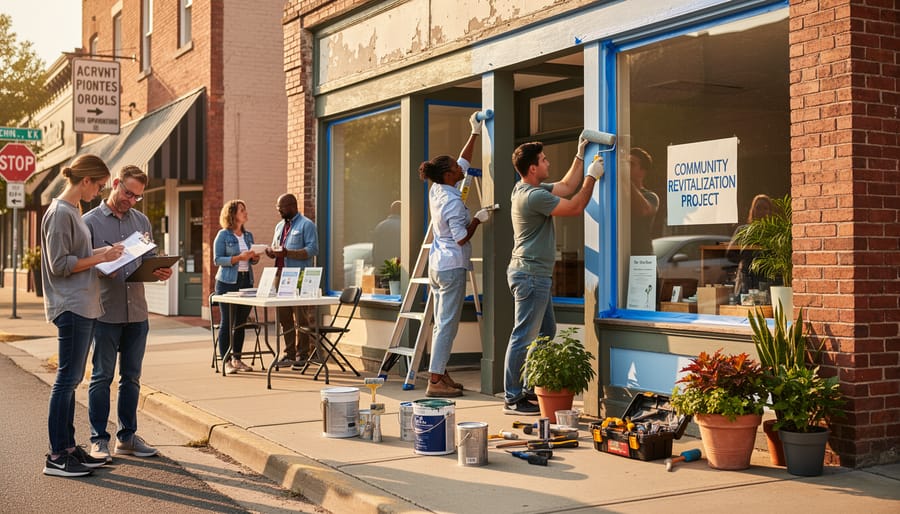
Several Canadian Main Streets have transformed their districts through strategic Z funding applications, demonstrating the program’s versatility across different community contexts.
In Kenora, Ontario, a $175,000 Z funding grant enabled the downtown business association to overhaul fifteen storefronts along Harbourfront Drive. The project combined heritage-sensitive façade restoration with modern accessibility upgrades. Within eighteen months, foot traffic increased by 34%, and seven new businesses opened in previously vacant spaces. The association paired Z funding with private investment at a 1:1 ratio, ultimately generating $350,000 in revitalization activity.
Pictou, Nova Scotia, took a different approach, using $120,000 in Z funding to launch a comprehensive Main Street marketing initiative alongside cultural activities that drew regional visitors. The funding supported a summer concert series, wayfinding signage, and a digital promotion campaign that positioned Pictou’s Water Street as a cultural destination. Local retailers reported a 22% uptick in weekend sales during the program’s first year.
In Brandon, Manitoba, Z funding addressed infrastructure gaps that had hindered business growth. A $200,000 grant funded streetscape improvements on Rosser Avenue, including pedestrian lighting, bench installations, and decorative crosswalks. The project enhanced community cohesion by creating gathering spaces where residents now host farmers’ markets and outdoor film nights.
Smaller communities have also seen results. Morden, Manitoba, used $85,000 in Z funding to establish a business mentorship program that has supported twelve startups on its Main Street since 2024. The program pairs new entrepreneurs with established merchants, reducing first-year business failure rates by an estimated 40%.
These examples span geographic and demographic contexts, but share common threads: strong local partnerships, clear objectives tied to economic outcomes, and willingness to match public funding with private commitment.
Common Questions About Z Funding for Main Street Initiatives
How long does it take to get Z funding approved?
Most Z funding applications receive a decision within 90 to 120 days of submission, though complex projects involving multiple partners or significant infrastructure work may take longer. Communities can expedite the process by submitting complete applications with all required documentation and letters of support.
What reporting is required once we receive Z funding?
Recipients submit quarterly progress reports detailing expenditures, project milestones, and community impact metrics. A final comprehensive report is due within 60 days of project completion, including photographs, financial statements, and evidence of outcomes such as increased foot traffic or new business openings.
Can we combine Z funding with other grants?
Yes, Z funding is designed to work alongside other federal, provincial, and municipal programs. You must disclose all funding sources in your application and ensure the combined support doesn’t exceed the total project cost, but stacking grants is often encouraged to maximize community investment.
What happens if our Main Street project needs to change direction?
Minor adjustments to timelines or specific activities typically require written notification and approval from your Z funding administrator. Significant scope changes, like shifting from façade improvements to public space design, need formal amendment requests submitted at least 30 days before implementation.
Beyond these common queries, applicants often wonder about renewal possibilities. While Z funding grants are typically one-time awards for specific projects, communities that complete their initial work successfully and demonstrate measurable impact can apply for new funding cycles to tackle different Main Street priorities. There’s no prohibition against multiple applications over the years, provided each addresses distinct community needs and shows how previous investments led to tangible improvements.
The key to navigating Z funding requirements is maintaining open communication with program administrators throughout your project. If unexpected challenges arise or opportunities emerge to amplify your impact, reach out early rather than waiting until a reporting deadline. This collaborative approach reflects the community-centered spirit that makes Z funding an effective tool for Main Street renewal.
Next Steps: Preparing Your Main Street for Z Funding
Readying your community for a Z funding application starts with conversation, not paperwork. Before you touch a form, gather your core stakeholders, business owners, property landlords, municipal staff, community development officers, and talk through what your Main Street truly needs. Ask whether the challenges you face align with Z funding’s scope: physical revitalization, capacity-building, or programming that draws people back to the district. If the fit is good, you’ll build momentum and shared ownership from day one.
Next, conduct a straightforward community needs assessment. Walk your Main Street with fresh eyes, noting vacant storefronts, tired façades, underused public spaces, and gaps in business mix or services. Talk to residents and shoppers about what would bring them downtown more often. Document these observations in writing, photos, survey summaries, simple maps, because Z funding reviewers want evidence that your priorities reflect genuine community input, not just one group’s wishlist.
Partnership matters as much as need. Z funding favours applications that show collaboration: a business improvement area working with the municipality, or a Main Street association partnering with a local college or non-profit. Identify who can contribute matching funds, volunteer time, or in-kind support, and get their commitment in writing early.
Main Street Canada offers templates, case studies, and regional advisors who’ve guided dozens of communities through this process. Reach out before you draft; their insights help you frame your proposal in terms reviewers recognize and value. Start these conversations now, and you’ll submit a stronger, more credible application when the window opens.
Z funding stands out among Canadian grant programs because it trusts communities to identify their own priorities and chart their own course. Rather than imposing a one-size-fits-all template, this model recognizes that the people who live and work on Main Street know best what their district needs to thrive. That collaborative spirit, where residents, business owners, municipal staff, and community organizations come together around a shared vision, is what transforms Z funding applications from paperwork into real momentum.
If your community has been talking about revitalizing your Main Street but struggling to find the right financial support, Z funding deserves a closer look. The success stories across Canada show that this program works for small towns and urban neighbourhoods alike, funding everything from streetscape improvements to cultural festivals that draw people back downtown. The eligibility requirements are straightforward, the timeline is manageable, and the results speak for themselves in stronger local economies and more vibrant public spaces.
Take the next step: gather your stakeholders, assess your community’s priorities, and explore whether Z funding aligns with your Main Street vision. The resources are there to support you through the application process, and communities across the country are proving what’s possible when local leadership meets the right funding model.