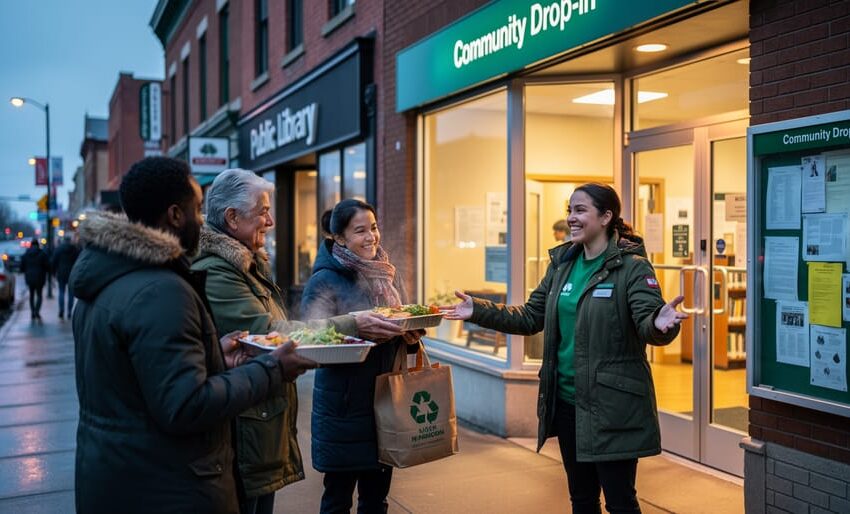
Community supports are the people, organizations, programs, and resources that help individuals and families navigate daily life, access services, and stay connected to the places they call home. They’re the safety net woven through every Canadian Main Street: the drop-in centre that offers hot meals and job counselling, the volunteer-run seniors’ program, the community health clinic, the after-school homework club, and the neighbour who checks in when someone hasn’t been seen in a while.
For Main Streets across Canada, community supports aren’t just social services. They’re the infrastructure of belonging. When a downtown corridor thrives, it’s often because residents know where to turn when they need help, when isolation creeps in, or when circumstances shift. These supports keep people housed, employed, healthy, and engaged. They reduce the pressure on emergency services, fill gaps left by stretched government budgets, and create the conditions for local businesses to serve customers who feel stable and rooted.
Understanding community supports means recognizing how formal programs and informal networks overlap. A business improvement area might fund a street outreach team. A library becomes an unofficial community hub. A faith group runs a food bank that partners with municipal housing services. The mechanic who fixes a single parent’s car at cost is delivering support just as surely as the provincial income assistance program.
This article breaks down what community supports actually are, how they work in practice, the different categories you’ll encounter on Canadian Main Streets, and where community leaders can start building or strengthening these vital connections in 2026.
What Community Supports Mean for Main Streets
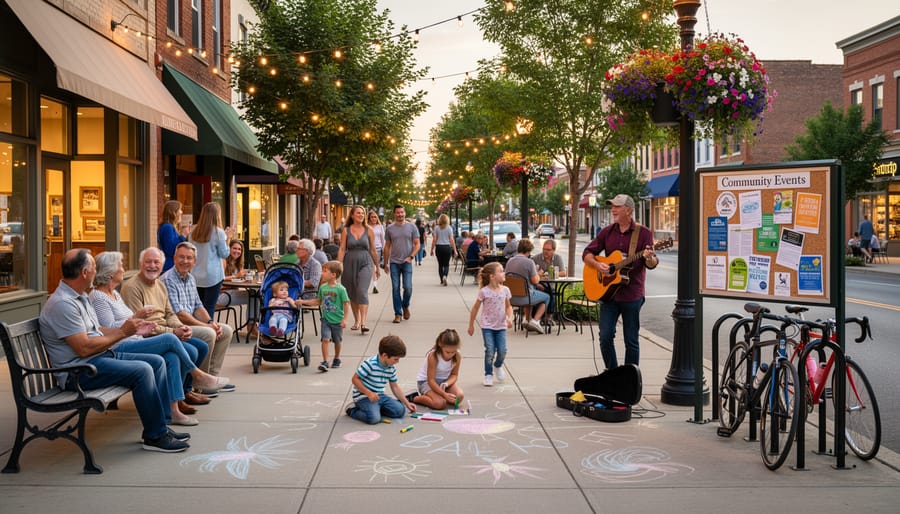
Community supports are the combined resources, services, networks, and advocacy efforts that communities bring together to strengthen their local Main Streets. These supports take many forms, from volunteer time and financial contributions to technical expertise, promotional campaigns, and collective organizing, all aimed at creating vibrant, sustainable commercial districts where businesses thrive and residents gather.
At their core, community supports represent what happens when community involvement transforms from intention into action. Instead of waiting for external solutions, communities pool their assets and talents to address local challenges directly. A business improvement area might rally merchants to fund seasonal decorations and events. Residents could organize cleanup days or advocate for better transit connections. Local professionals might offer pro bono design consultations for storefront improvements. These varied contributions create an ecosystem of support that no single entity could provide alone.
The relationship between community involvement and these support mechanisms is reciprocal. Active participation identifies what a Main Street needs, while effective supports make participation meaningful and sustainable. In Winnipeg’s Exchange District, for example, property owners, artists, and residents formed partnerships that led to heritage grants, mural programs, and business mentorship initiatives. In small-town Nova Scotia, communities have leveraged Main Street Canada‘s framework to access training, connect with other revitalizing districts, and secure seed funding for strategic projects.
This collaborative approach reflects a distinctly Canadian understanding: Main Streets belong to everyone who uses them, and their success depends on contributions from across the community.
How Community Supports Work in Practice
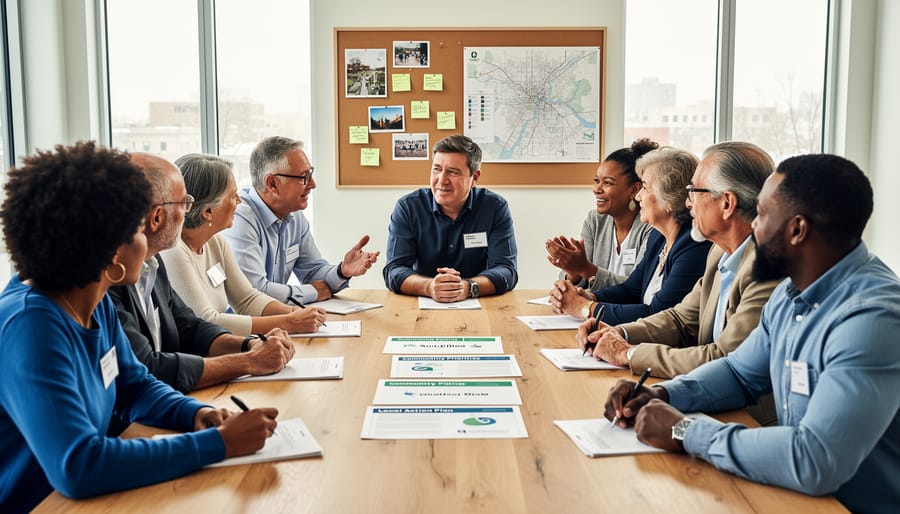
Community supports operate through a collaborative framework that brings together diverse stakeholders around a shared vision for their Main Street. The process typically begins with grassroots identification of needs, local business owners notice empty storefronts, residents voice concerns about public spaces, or community groups recognize gaps in services. These concerns spark conversations that evolve into organized action.
At the heart of the operational model sits a coordinating body, often a Business Improvement Area (BIA), Main Street association, or community development committee. These groups create the structure that channels community energy into tangible outcomes. They establish regular meeting schedules, set priorities through community consultation, and create working committees focused on specific initiatives like beautification, events, or business development.
The mechanics of collaboration involve multiple layers of contribution. Community members might participate in visioning sessions or volunteer for street festivals. Local businesses contribute through membership fees, in-kind donations, or lending expertise. Municipal governments provide regulatory support, infrastructure investment, and sometimes matching funds for community-led projects. Provincial and federal programs offer grants and technical resources that communities can access through their coordinating organizations.
Organizations like Main Street Canada serve as connectors and capacity builders, linking local efforts to a national network of knowledge, best practices, and funding opportunities. They provide training for volunteer boards, templates for planning documents, and peer connections to communities facing similar challenges.
The progression from engagement to action follows a recognizable pattern: community conversations lead to formal organization, which enables access to resources, which funds pilot projects that demonstrate impact, which builds momentum for larger transformations. Success depends on maintaining open communication channels, transparent decision-making processes, and inclusive participation structures that reflect the community’s diversity.
This collaborative ecosystem works because it distributes responsibility while concentrating effort. No single entity shoulders the entire burden of revitalization. Instead, each stakeholder contributes what they can, time, money, skills, or influence, creating a resilient support system that can adapt to changing circumstances and sustain momentum over years.
Types of Community Supports That Revitalize Main Streets
Financial and Resource Support
Financial resources form the foundation that turns community vision into visible Main Street transformation. Canadian communities access multiple funding streams, each designed to reduce financial barriers and share project risk across stakeholders.
Grant programs remain the most common starting point. Federal initiatives like the Canada Community Revitalization Fund and provincial place-making grants provide capital for façade improvements, signage upgrades, and public infrastructure. The grant funding model typically requires community matching contributions, ensuring local buy-in while stretching public investment.
Micro-loan programs fill gaps where traditional bank financing falls short. Community development corporations and credit unions across Canada offer low-interest loans of $5,000 to $50,000 for inventory expansion, equipment purchases, or interior renovations, amounts too small for conventional lenders but transformative for independent retailers.
Crowdfunding has emerged as both fundraiser and marketing tool. Main Street BIAs launch campaigns for specific projects like heritage murals or seasonal markets, engaging residents as investors in their downtown’s future. Contributors gain ownership beyond dollars donated.
In-kind donations multiply purchasing power. Local contractors discount labour for façade work, suppliers provide materials at cost, and property owners reduce rents during tenant fit-ups. Corporate sponsorships underwrite events and programming, offsetting operational costs while building brand goodwill within the community.
Human Capital and Volunteer Networks
The heart of community supports beats strongest in the people who step forward. Volunteer boards anchor Main Street revitalization efforts across Canada, bringing together business owners, residents, and local leaders who meet regularly to guide strategy, plan events, and make decisions that shape their district’s future. These aren’t ceremonial roles, board members commit real hours to everything from grant applications to sidewalk cleanup coordination.
Business improvement associations formalize this volunteer energy into structured organizations with dedicated members who champion specific initiatives. In smaller communities, a single passionate individual often becomes the catalyst for change, rallying neighbours and creating momentum where none existed before.
Skilled professionals donating expertise multiply impact exponentially. Architects sketch streetscape concepts pro bono, accountants help merchants understand their finances, marketers craft social media campaigns, and tradespeople repair facades at cost. This knowledge transfer builds local capacity that outlasts any single project.
The diversity within volunteer networks matters tremendously. When committees include longtime business owners alongside newcomers, youth representatives, Indigenous community members, and residents from different neighbourhoods, the resulting solutions reflect broader needs and forge stronger community bonds. That inclusive participation transforms Main Streets into genuinely shared spaces.
Technical and Educational Support
Technical expertise and educational programming form a critical pillar of community supports, helping Main Street stakeholders build the skills and knowledge they need to succeed. These supports bridge the gap between good intentions and effective action.
Training programs offered through organizations like Main Street Canada equip business owners with practical skills in areas such as retail management, digital marketing, financial planning, and customer service. Provincial economic development agencies frequently run workshops on storefront design, accessibility standards, and lease negotiations. Local chambers of commerce organize seminars on hiring practices and inventory management tailored to small retailers.
Mentorship connects experienced entrepreneurs with newcomers navigating the challenges of opening or expanding a Main Street business. Seasoned shop owners share hard-won lessons about supplier relationships, seasonal cash flow, and community engagement strategies that textbooks rarely cover.
Feasibility studies and design assistance help communities make informed decisions about streetscape improvements, mixed-use development projects, and public realm investments. Urban planners, architects, and landscape designers often provide pro bono consultations or reduced-rate services to support Main Street planning efforts.
These capacity-building initiatives create a foundation of competence and confidence, enabling communities to tackle revitalization work with greater sophistication and sustainability.
Where Community Supports Are Applied on Main Street
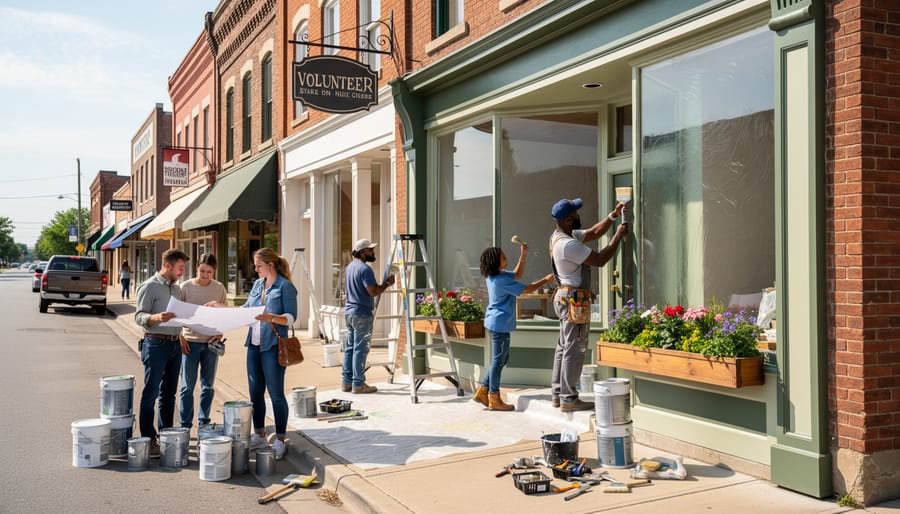
Community supports transform abstract goodwill into visible improvements that reshape how residents and visitors experience Main Street. In towns from Mahone Bay, Nova Scotia to Smithers, British Columbia, these supports tackle the physical, economic, and social gaps that threaten commercial district vitality.
Storefront improvements represent one of the most visible applications. Community loan funds and façade grant programs help merchants upgrade aging signage, repair brickwork, and restore heritage details that had fallen into disrepair. In Stratford, Ontario, a volunteer design committee paired with a municipal matching grant program enabled seventeen downtown businesses to complete exterior renovations in a single year, creating a cohesive streetscape that boosted foot traffic by 23 percent.
Public space activation draws heavily on volunteer energy and in-kind donations. Communities convert underused parking lots into seasonal patios, transform alleys into mural galleries, and install planters built by local trades students. These interventions make Main Street feel welcoming rather than neglected, encouraging people to linger.
Business recruitment and retention rely on mentorship networks and technical assistance. Experienced retailers volunteer to guide newcomers through lease negotiations, inventory planning, and local marketing. Chambers of commerce coordinate “shop local” campaigns funded by member dues and municipal sponsorships, keeping consumer spending anchored in the district rather than draining to online retailers or suburban malls.
- Façade restoration programs combining grants with volunteer design review
- Seasonal markets and cultural events organized by volunteer committees
- Sidewalk widening and street furniture funded through community fundraising and government partnerships
- Pop-up shop initiatives providing below-market rent to test new business concepts
- Heritage building stabilization using technical expertise donated by architects and engineers
Cultural programming brings communities together while attracting visitors. From winter light festivals to summer concert series, these initiatives depend on volunteer coordination, sponsor contributions, and collaboration with arts organizations. In some neighbourhoods, Japanese activities like taiko drumming workshops and ikebana demonstrations have created distinct cultural identities that set Main Streets apart.
Infrastructure upgrades often require hybrid support structures. A town might secure provincial infrastructure funding while community groups raise matching dollars and coordinate construction timelines with merchants to minimize disruption. This collaborative approach ensures projects meet both technical standards and community priorities, whether that means accessible sidewalks, improved lighting, or stormwater management that protects historic buildings.
Building and Accessing Community Supports
Building community supports starts with understanding what already exists in your neighbourhood. Conduct a simple asset inventory: list the active organizations, engaged residents, local business associations, available meeting spaces, and any grants or programs your municipality offers. Walk your Main Street and talk to business owners, speak with long-time residents, and connect with cultural groups. You’ll often discover hidden capacity, a retired accountant willing to mentor new businesses, a landlord interested in façade improvements, or a community group looking for a project to champion.
Once you know your assets, bring stakeholders together. Host an open community meeting at a neutral location like the library or community centre. Frame the conversation around shared goals rather than individual agendas. What does everyone want for this Main Street? Where do interests overlap? Canadians respond well to collaborative approaches that honour diverse perspectives, so create space for Indigenous voices, newcomers, youth, and established businesses to contribute equally. These initial conversations build the trust necessary for sustained collective action.
Partner strategically with organizations that support Main Street revitalization. Main Street Canada offers training, resources, and a national network of communities facing similar challenges. Provincial business development agencies, municipal economic development offices, and regional community futures organizations provide funding, technical expertise, and connections. Don’t overlook cultural institutions, post-secondary institutions, and service clubs, they often have resources and volunteers eager to engage locally.
Create structures that sustain participation over time. Establish a Main Street committee with clear roles, rotating leadership, and regular meetings. Form working groups focused on specific priorities like events, beautification, or business recruitment. Keep bureaucracy light and celebrate small wins publicly. Recognition matters: feature volunteers in local media, acknowledge contributions at community gatherings, and share success stories that demonstrate impact. When people see their efforts making a visible difference, momentum builds naturally and community supports deepen.
Common Questions About Community Supports
Community leaders stepping into Main Street revitalization often share similar concerns about accessing and implementing supports. Here are answers to the questions that come up most frequently in communities across Canada.
Who qualifies for community supports?
Most community supports are designed to be inclusive, local businesses, non-profits, community associations, and municipal governments can all access different types of assistance. Eligibility typically depends on the specific program or initiative, but the guiding principle is serving the broader community benefit rather than individual profit alone.
How long does it take to see results?
Quick wins like storefront improvements or event programming can generate visible momentum within months, while deeper transformations involving infrastructure or cultural shifts typically unfold over two to five years. The timeline depends on your starting point, the scope of your goals, and how actively your community engages.
What if our community is small or remote?
Size and location don’t disqualify you, many rural and remote Main Streets have successfully leveraged supports by focusing on their unique assets and forming regional partnerships. Programs like Main Street Canada specifically recognize the distinct challenges and opportunities facing smaller communities.
How do we measure the impact of community supports?
Track both hard metrics (new businesses opened, jobs created, property values, foot traffic) and soft indicators (community pride, volunteer participation, event attendance). The most meaningful measurement combines quantitative data with qualitative stories that capture how your Main Street feels different.
These answers reflect what communities learn through experience: accessing supports isn’t about meeting rigid criteria, but about demonstrating commitment to collective well-being. Start where you are, measure what matters locally, and recognize that building a vibrant Main Street is a marathon with rewarding milestones along the way.
Community supports are ultimately about people, neighbours who believe in the future of their Main Street and choose to invest their time, skills, resources, and energy into making it thrive. These aren’t abstract concepts or bureaucratic programs. They’re the business owner mentoring a newcomer, the volunteer painting a mural, the accountant offering pro bono advice, the resident showing up to planning meetings, and the local government official championing downtown revitalization. Every act of participation, no matter how small, strengthens the fabric of your commercial district and signals to others that this place matters.
Canadian Main Streets have always drawn strength from collective effort. When communities mobilize together, pooling knowledge, sharing resources, advocating for change, and celebrating local successes, they create momentum that individual businesses or governments alone cannot achieve. The supports you’ve read about in this article exist because communities demanded them, built them, and continue to sustain them through ongoing engagement.
If you’re wondering how to contribute to your own Main Street’s vitality, start by connecting with your local business improvement area, Main Street organization, or municipal economic development office. Attend community meetings. Share your ideas. Volunteer for a project. Support local businesses with your wallet and your voice. Main Street Canada works across the country to facilitate these connections, offering resources and frameworks that help communities organize and amplify their impact.
Your Main Street’s future depends on community supports, and those supports begin with you.